Getting your hearing tested annually is an important part of staying on top of your overall health, just like you visit your primary care physician and eye doctor regularly. In fact, the World Health Organization (WHO) recommends that you get your hearing tested every year once you reach the age of 651. Hopefully, you have your annual checkup on the calendar already. If so, here are some things you can do to prepare for it.
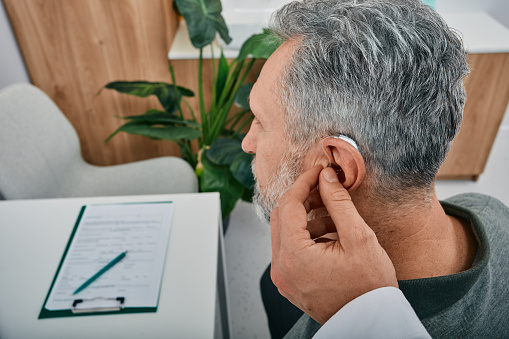
What We Accomplish at an Annual Test
If you’re reading this article, it’s highly likely that you’ve had your hearing tested before and are currently on a hearing loss treatment program. If that’s true, then your annual hearing test is not an assessment of whether or not you have hearing loss—you already know you do—but a chance to track changes in your hearing. Hearing loss continues to develop, and as your partners on your hearing health journey, we want to stay on top of your hearing needs as they progress.
How You Can Prepare
You already know the drill in terms of what will happen at your hearing test (though if you need a refresher or this is your first appointment with Bangor Audiology, here’s a previous article of ours!). Since you already know what to expect, the preparations are more logistical in nature than mental. Here are our two biggest suggestions on what to do before your appointment.
Discussing Hearing and Health Changes
Before beginning any new tests, we’ll have a sit-down discussion with you about changes in hearing, health or lifestyle. We’ll ask you if there have been any changes or if you’ve noticed any new symptoms. This is your chance to tell us things such as:
- Your hearing difficulties have become more pronounced (e.g., no longer able to hear high-pitched noises or all sounds seem quieter than before)
- You’ve developed new hearing loss symptoms, such as listening fatigue
- You’ve noticed greater difficulties in listening to or comprehending speech when someone is speaking to you
- Loved ones or friends have raised concerns with you about your hearing health
- Any new diagnoses, such as diabetes2 or heart disease3, as many health conditions can indirectly impact hearing health
- Any new hobbies you’ve picked up
Before your appointment, prepare for this conversation by making a mental note of things you could raise. It may be beneficial to keep a diary of hearing loss symptoms, especially in the weeks or months leading up to your annual appointment. It can be hard to recall changes like these when asked by the audiologist and put on the spot, so having a record at your fingertips can go a long way.
Evaluating Your Hearing Aids
Your annual appointment is also an opportunity to adjust or even discuss upgrading your hearing aids. Once your updated audiogram is in hand, your audiologist will program your hearing aids (if necessary) to meet your current needs.
This is an excellent time for you to discuss any other adjustments you may need. Think about any settings you’d like adjusted or custom listening programs you’d like programmed. If you’ve picked up a new hobby that takes place in a specific soundscape, a custom program for that scenario may help you immensely. For example, if you’ve started golfing a lot more, you may want a program that is calibrated to the wide-open space of the golf course and can cut back on pesky wind noise.
You should also raise any concerns about your hearing aids so we can help you troubleshoot any potential issues. Some possible issues you may need to raise include:
- Feedback
- Not fitting properly
- Power or battery issues
- Diminished sound quality
Again, keeping a diary or something similar could be really helpful here.
We’ll See You Soon!
We look forward to seeing you again at your annual hearing appointment! If you have any questions about what to bring or what to think about to prepare, or if you still need to get your annual test on the calendar, call our office at Bangor Audiology.
Learn More
1 Chadha, S., Dillard, L. K., Mariotti, S. P., & Keel, S. (2023). Monitoring hearing and vision functions in older adults: rationale and process. Age and ageing, 52(Suppl 4), iv158–iv161. https://doi.org/10.1093/ageing/afad123
2 American Diabetes Association. (2026). Diabetes and hearing loss. American Diabetes Association. https://diabetes.org/about-diabetes/complications/hearing-loss/diabetes-and-hearing-loss
3 Baiduc, R. R., Sun, J. W., Berry, C. M., Anderson, M., & Vance, E. A. (2023). Relationship of cardiovascular disease risk and hearing loss in a clinical population. Scientific reports, 13(1), 1642. https://doi.org/10.1038/s41598-023-28599-9