Hearing loss is a common health condition that affects almost 50 million people in the United States. And as we age, it rises in prominence, affecting more than half of people over age 75. Therefore, it’s incredibly likely that, at some point in your life (if not already), you will also experience hearing loss.
While hearing loss is natural and nothing to be alarmed by, there are some actions you can take throughout your life that can extend your hearing health.
How Does Hearing Loss Occur?
The vast majority of cases of hearing loss are caused either by aging or exposure to loud noise (or a little bit of both), and both causes diminish your hearing ability in the same way.
Your main hearing organ is the cochlea, a snail-shaped organ deep in the inner ear. Thousands of tiny sensory cells inside the cochlea detect sound waves, encode them into electrical signals and transmit them to the brain for processing. Without these sensory cells, sound waves would not reach the brain.
Both aging and loud noise will cause these sensory cells to deteriorate. With aging, this happens naturally; like all cells in your body, they degenerate over time. Loud noise, on the other hand, directly damages them. Large, forceful sound waves from loud noises can physically damage the inner structures of sensory cells or break them entirely. When these cells are damaged, they do not regenerate, and the damage is permanent.
How Does Hearing Protection Help?
While there isn’t much you can do about the natural aging process, you can protect your hearing from loud noise exposure and keep your cochlear sensory cells in healthy condition for as long as possible. If you protect yourself now, if age-related hearing loss begins to manifest, it may not be as severe.
Good hearing protection works very simply: it blocks destructive sound waves from reaching the inner ear at their full force. There are two main types of hearing protection. They are both common and easy to find.
Earplugs
Earplugs are small, soft devices that you insert into your ear canal. To insert them properly, squish them between your fingers until they’re compressed, then place them in your ear. They will expand back out and mold to the shape of your ear canal, creating a snug fit that seals it off perfectly. This soft material (usually foam or silicone) is perfect for ensuring they fit your ear properly and for absorbing sound waves and dampening them, so the waves are less intense when they enter the ear.
Earmuffs
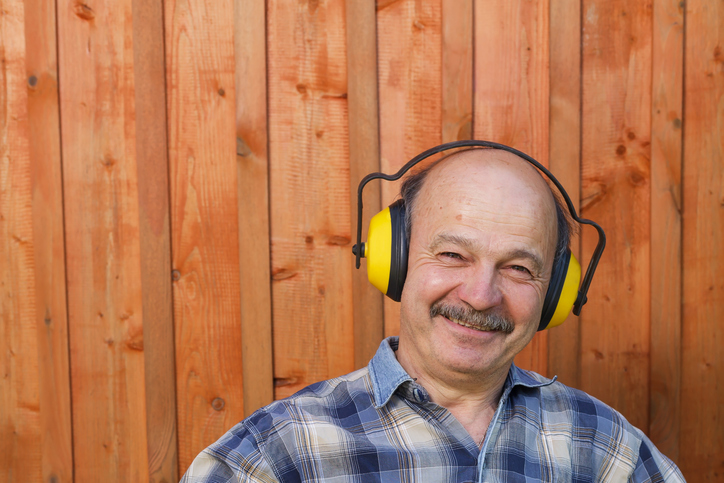
Earmuffs are larger. They fit over the whole ear and are lined with soft material, often foam. These are typically used for specific activities, such as working in a machine shop or shooting firearms. Because the foam is in contact with the outer shell of your ear rather than the ear canal, earmuffs are good at making sure minimal sound enters your ear.
Hearing Tests as Hearing Protection
Putting sound-absorbing materials on or in your ears aren’t the only forms of hearing protection. Getting your hearing tested regularly is a part of hearing protection, too. Both noise-related and age-related hearing loss develop gradually, and you may not even notice symptoms at first, so a hearing test is advantageous for picking up what you missed. And even if you get your hearing tested and your results are in the healthy hearing range, this is still useful information, as you’ve now established a hearing baseline against which you can track any potential changes over the years. If you’re interested in learning more about hearing protection or scheduling a hearing test appointment, call Bangor Audiology today!